

Feeding Therapy at SLC
Savoring a good meal is not only life-sustaining, but can also bring us enjoyment, nourishment, and closeness with those that we love. It’s easy to take this seemingly simple pleasure and basic life function for granted, but people of all ages may experience difficulties with feeding.

About Feeding Therapy
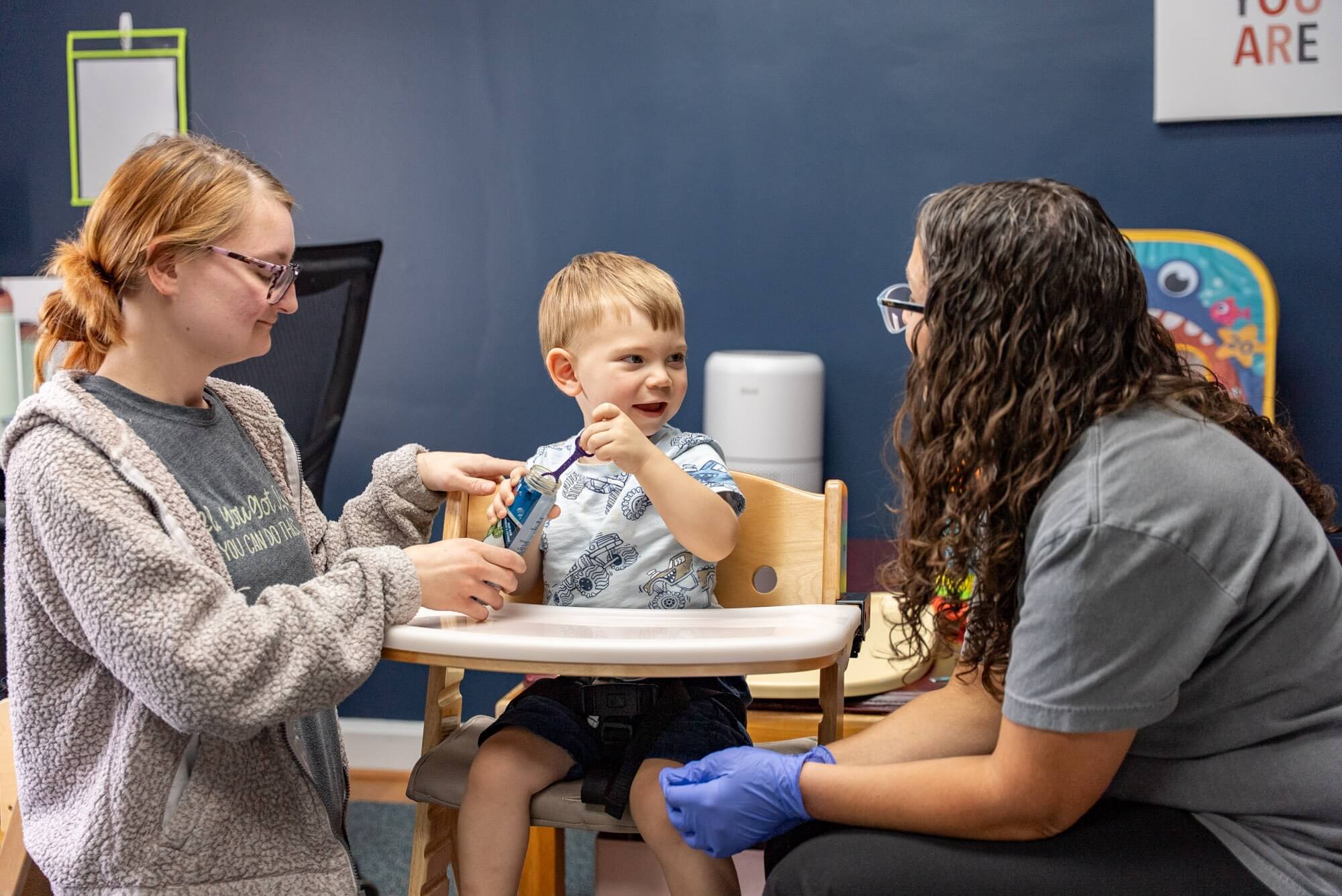
Feeding concerns may stem from a wide variety of root causes, such as sensory processing difficulties, food aversions, attention-related reasons, behavioral habits, long-standing health conditions or acute events, and physiological difficulties with the processes of chewing and swallowing. Clients may work with a speech therapist or an occupational therapist for feeding therapy depending on the specific concerns, and having a team of therapists in both disciplines at our office allows us to more fully explore and effectively address a variety of underlying reasons for the difficulties our clients may be experiencing.
Our Approach: How does Feeding Therapy help?
Our services include helping clients with:
- Developmental milestones (self-feeding, using utensils, etc)
- Preventing aspiration
- Sensory aversion
- Chewing skills
- Cup/straw drinking
- Tube weaning
- Swallowing strategies
- Selective eating
- Nutritional needs
Feeding Therapy Evaluations
A typical pediatric feeding evaluation will include eating and drinking, so we ask caregivers to bring along one preferred and one non-preferred food, and a cup the child is accustomed to drinking from. Please let us know if you or your loved ones have been experiencing any coughing or choking while eating or drinking, as we may need to refer you for a specialized swallowing test (MBS) at your preferred local hospital to evaluate this before beginning services. We do require an MBS, FEES, or other diagnostic imaging test for all adult swallowing patients prior to scheduling an initial evaluation with us.
Benefits of Feeding Therapy
Improved Eating Skills
Teaches how to chew, swallow, and self-feed effectively.
Increased Variety
Expand food choices to include nutritious options.
Safe Mealtime Habits
Helps prevent aspiration and ensure safe swallowing.
Reduced Mealtime Stress
Create a more positive and enjoyable experience for families.
Tailored Solutions
From cup drinking to tube weaning, plans are personalized for each client’s needs.
Our Locations

Feeding Therapy in Harrisonburg, VA (Spotswood Trail)
Learn More
Feeding Therapy in Loudoun County, VA (Ridgetop Circle)
Learn MoreWhat Families Are Saying
Read inspiring stories of progress and growth from the people we’ve helped.
Find Answers to Your Questions
You may have questions about our services and how we can help. Here are some of the most common ones:
What does a feeding evaluation involve?
A typical pediatric evaluation includes eating and drinking, so we ask caregivers to bring one preferred and one non-preferred food, along with a cup the child is familiar with.
Do you work with adults?
Yes, adult patients with swallowing issues need an MBS, FEES, or similar diagnostic imaging test before beginning services.
What kinds of issues can feeding therapy address?
We help with a range of concerns, including sensory aversion, chewing, swallowing, self-feeding, tube weaning, and nutritional needs.
How do I know if feeding therapy is right for my child or loved one?
If you notice coughing or choking while eating, extreme pickiness, or difficulty with self-feeding, a feeding evaluation can help identify the best next steps.